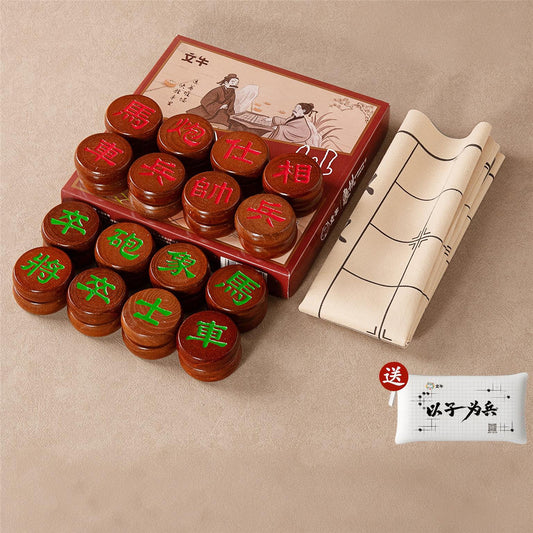
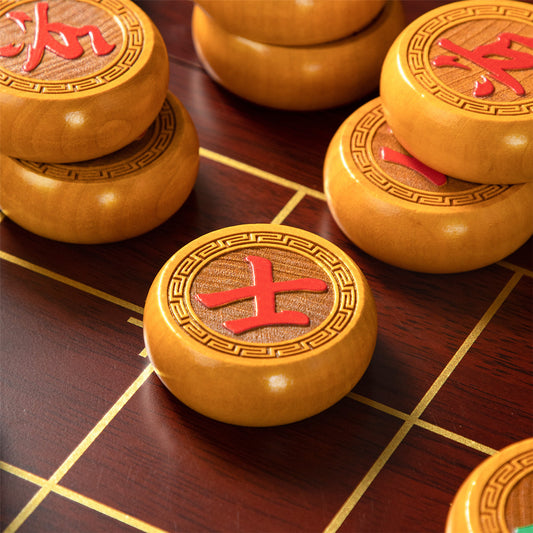
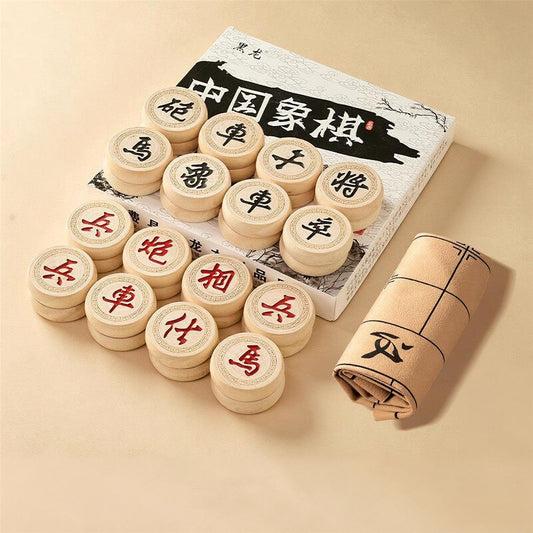
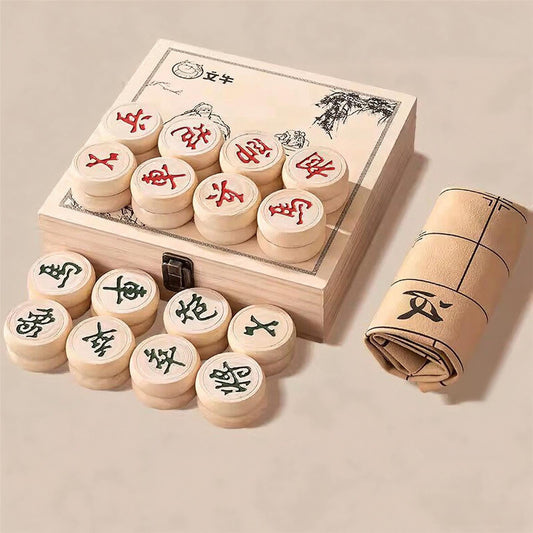
Combien de pièces y a-t-il aux échecs chinois ? Un guide complet des 32 pièces du Xiangqi
Le jeu d'échecs chinois, appelé Xiangqi, n'a jamais été aussi naturel que lorsque l'on voit deux vieillards dans un parc de Pékin, manœuvrant tranquillement et intensément autour des disques de bois. C'est l'un des jeux de stratégie les plus populaires au monde, avec des centaines de millions d'utilisateurs actifs en Chine, au Vietnam et dans la communauté chinoise du monde entier. Étonnamment, la première question utile qui viendra à l'esprit du novice est : « Combien de pièces y a-t-il aux échecs chinois ? »
La réponse est « 32 » et elle est assez simple. Dans chaque partie, les deux camps (Rouge et Noir) disposeront de 7 types de pièces différentes qu'ils contrôleront avec exactement 16 pièces. Cependant, ce n'est que la moitié de l'histoire. Il ne s'agit pas tant d'apprendre les faits que de savoir pourquoi elles sont alignées de cette manière et ce que chaque pièce fait sur l'échiquier.

La répartition des 32 pièces : Rouge contre Noir
Le jeu de Xiangqi se joue sur une grille de lignes qui s'entrecroisent de 9x10 (ce qui surprend de nombreux joueurs venant des échecs internationaux). Les pièces sont placées sur les points où les lignes se croisent ; pas à l'intérieur des cases. Tous les joueurs commencent avec les mêmes 16 pièces, à la seule exception qu'elles varient en couleur dans certains cas (et dans quelques-uns, par leur nom).
Voici la répartition complète pour un camp :
| Type de pièce | Nom chinois (Rouge / Noir) | Nombre par camp | Total sur l'échiquier |
|---|---|---|---|
| Général | 帅 / 将 (Shuai / Jiang) | 1 | 2 |
| Conseiller | 仕 / 士 (Shi / Shi) | 2 | 4 |
| Éléphant | 相 / 象 (Xiang / Xiang) | 2 | 4 |
| Char | 车 / 車 (Ju / Ju) | 2 | 4 |
| Cheval | 马 / 馬 (Ma / Ma) | 2 | 4 |
| Canon | 炮 / 砲 (Pao / Pao) | 2 | 4 |
| Soldat | 兵 / 卒 (Bing / Zu) | 5 | 10 |
Additionnez-les — 1+2+2+2+2+2+5 — et vous obtenez 16 pièces par camp, 32 au total. C'est parce que les chiffres sont cohérents avec toutes les références faisant autorité en matière d'échecs chinois et tous les ensembles de règles officiels utilisés dans les tournois d'échecs chinois, y compris ceux joués sous la Fédération Asiatique de Xiangqi.
Un point à noter pour les apprenants de la langue anglaise, cependant, est que les deux types de pièces ont des noms différents en Rouge et en Noir, bien qu'elles se déplacent de la même manière. Du côté Rouge, le Général est nommé "Shuai" et du côté Noir, il est nommé "Jiang". Les pièces Conseiller et Éléphant sont les mêmes dans les deux sens et diffèrent par leur couleur. Cette nomenclature n'est pas jolie, c'est le reflet de l'origine du jeu dans la réalité, où les armées Rouge et Noire (le plus souvent les armées Han et Chu de l'histoire chinoise) auraient naturellement leurs propres noms pour le même grade.

Pourquoi le nombre de pièces n'est pas arbitraire
L'une des erreurs les plus typiques des étrangers qui apprennent les échecs est de penser que le placement des pièces est "autant que ce qui semble équilibré". Ce n'est pas le cas. Le nombre de pièces correspond à une certaine position tactique sur l'échiquier de 9x10, et les ratios sont plus ou moins constants depuis l'histoire documentée.
Le Général est à 1 pièce par camp car toute la partie tourne autour de ce qui lui arrive ; aux échecs internationaux, le jeu consiste à mater le roi, mais dans ce cas, le Général est encore plus restreint dans ses mouvements, étant piégé dans la zone du "palais" de 3x3 à l'arrière de l'échiquier.
Les Conseillers et les Éléphants sont représentés deux fois de chaque côté car ils entourent le palais comme une défense. La combinaison de deux Conseillers sur leurs diagonales respectives de la moitié de l'échiquier, avec deux Éléphants sur des points diagonaux fixes sur leurs moitiés de l'échiquier respectives, crée une défense stratifiée qu'une seule pièce de l'un ou l'autre type ne pourra jamais réaliser. Si un Conseiller est retiré, le flanc du Général est ouvert et si les deux Conseillers sont retirés, alors le Roi est tout à fait vulnérable — d'où le fait que les joueurs expérimentés échangent rarement les deux Conseillers tôt à moins d'y être contraints.
Chacune des 3 pièces (offensives) est en double exemplaire, la logique de l'armée sur le champ de bataille est prise en compte : 1 pièce sur le flanc gauche, 1 pièce sur le flanc droit. Le déplacement du Char est illimité comme une tour aux échecs internationaux et est généralement considéré par les joueurs compétitifs comme la pièce la plus précieuse sur l'échiquier — comme le dit le vieux proverbe d'échecs chinois, "un Char vaut dix pièces moindres". Le Cheval se déplace en L comme un cavalier, et a la capacité d'affecter jusqu'à 8 points à la fois depuis un point central. Contrairement aux autres pièces, il n'y a pas de correspondance exacte avec le Canon aux échecs occidentaux, mais son mode de déplacement peut capturer en sautant exactement par-dessus une pièce (amie ou ennemie) pour frapper une cible au-delà de cette pièce, et peut se déplacer librement le long des lignes ouvertes, faisant du placement l'une des compétences les plus subtiles pour le joueur intermédiaire.
Les Soldats sont le type de pièce le plus nombreux car ils sont le soldat de première ligne qui sera sacrifié. Un Soldat n'est autorisé à avancer que d'un point avant de traverser la rivière (la ligne horizontale qui se trouve au milieu du plateau). Il traverse et peut également se déplacer latéralement, mais ne peut jamais reculer. Bien qu'ils puissent être individuellement faibles, si cinq Soldats travaillent ensemble, ils peuvent exercer une pression prolongée qui peut briser la position d'un adversaire — ce pour quoi ils ont été conçus.

Comparaison des pièces rouges et noires côte à côte, avec toutes les fonctions expliquées.
| Catégorie de fonction | Pièces du côté Rouge | Pièces du côté Noir | Rôle stratégique |
|---|---|---|---|
| Pièce de commandement | 1 Général (Shuai) | 1 Général (Jiang) | Doit être protégé à tout prix ; sa perte met fin à la partie |
| Défense intérieure | 2 Conseillers | 2 Conseillers | Mouvement diagonal uniquement à l'intérieur du palais |
| Défense extérieure | 2 Éléphants | 2 Éléphants | Points diagonaux fixes, ne peuvent pas traverser la rivière |
| Attaque lourde | 2 Chars | 2 Chars | Mouvement illimité en ligne droite, valeur matérielle la plus élevée |
| Attaque de flanc | 2 Chevaux | 2 Chevaux | Sauts en L, difficiles à bloquer |
| Attaque indirecte | 2 Canons | 2 Canons | Nécessite une pièce "écran" pour capturer |
| Force d'attrition | 5 Soldats | 5 Soldats | Mobilité individuelle limitée, pression cumulative en groupe |
Le jeu de Xiangqi, comme les échecs internationaux, est un jeu d'information pure et de prise de décision, et non de positions de départ asymétriques, en raison de la parfaite symétrie des deux camps en termes de quantité et de capacité. Le seul avantage "intégré" est le premier coup, qui est attribué au Rouge, par convention.
Qu'est-ce que cela a à voir avec les échecs internationaux ? Quelles sont les similitudes avec les échecs internationaux ?
La comparaison des pièces est en fait utile pour aborder le Xiangqi en venant du monde des échecs, en tant que joueur d'échecs occidental. Les échecs internationaux fournissent également à chaque camp 16 pièces, mais la disposition à l'intérieur du camp est quelque peu différente : 8 pions au lieu de 5 soldats, 2 fous et 2 cavaliers, par opposition à 2 éléphants et 2 chevaux, 2 tours au lieu de 2 chars, et une paire reine/roi par opposition à une paire Général/conseiller. Que les deux jeux aient le même nombre de 32 pièces est une coïncidence (mais intéressante pour certains nouveaux joueurs) mais l'interaction des pièces avec la géométrie du plateau est complètement différente, en partie parce que les pièces de Xiangqi sont placées sur des intersections et non des cases, et en partie parce qu'il n'y a pas d'équivalent occidental au mécanisme de capture par écran utilisé par le Canon.

Les conseils fournis ici sont conçus pour aider les nouveaux joueurs à maîtriser le poker.
Lorsque vous établissez un plan pour la première fois, voici la liste fonctionnelle que vous devez avoir : 16 pièces Rouges et 16 pièces Noires, un Général dans le palais de chaque joueur, deux Conseillers et deux Éléphants sur l'écran défensif de chaque côté, deux Chars et deux Chevaux sur les flancs de chaque joueur, deux Canons juste devant les Chevaux de chaque joueur, et cinq Soldats répartis uniformément sur la troisième rangée depuis le bord de l'échiquier de chaque joueur. Si vous constatez que l'un de ces comptes n'est pas correct, il est possible que votre ensemble soit incomplet ou que vos pièces proviennent d'un lot de production différent — ce qui est plus courant que vous ne le pensez avec les ensembles de Xiangqi bon marché vendus en ligne.
Connaître la structure complète de 32 pièces n'est pas une connaissance triviale. Le fait même de devoir savoir où se trouvent les pièces et pourquoi, est la base de tout apprentissage ultérieur dans le jeu — l'évaluation des pièces, la théorie d'ouverture et la technique de fin de partie.