How to Learn Chinese Chess by Yourself: A 5‑Step Roadmap from Zero to Advanced
Chinese chess (Xiangqi) can look intimidating at first—different board, unfamiliar characters, moving fortresses. But the learning path is actually more structured than most people expect.
I reached the rank of Level 8 on the Tiantian Xiangqi app (the Chinese equivalent of a strong club player) starting from absolute zero, without watching a single tutorial or reading a book. Here’s the exact 5‑step framework I used—written for Western learners who want a clear, no‑fluff roadmap.

Step 1: Know the Board and the Pieces (But Skip the History)
Before you move a single piece, understand what the lines mean. In Xiangqi, the board is a 9×10 grid, not 8×8 like international chess. The key terms you’ll actually use:
- River – the horizontal divider in the middle. Elephants cannot cross it; soldiers move differently after crossing.
- Palace – the 3×3 box at each end. The general (king) and advisors stay inside this zone.
- File lines – vertical columns are numbered 1–9 from each player’s right.
- Soldier line – the rank where your five pawns start (third rank from your side).
- Cannon line – the rank where your cannons sit (second rank from your side).
The seven piece types (with English names):
| Chinese | English | Quick identity |
|---|---|---|
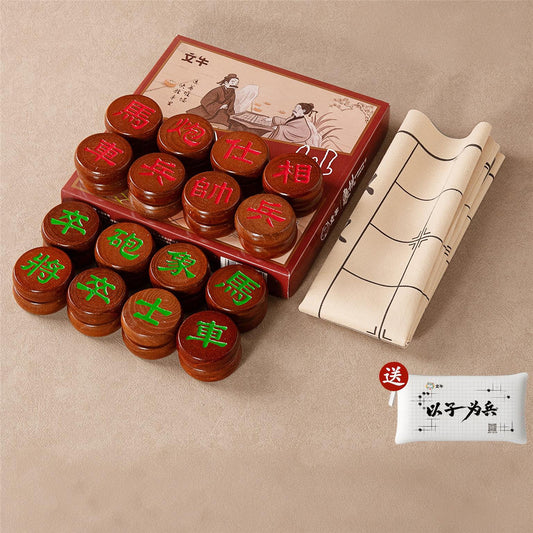
| 帅/将 | General (King) | Moves one point orthogonally inside the palace |
| 仕/士 | Advisor | Moves one point diagonally inside the palace |
| 相/象 | Elephant | Moves exactly two points diagonally (blocked by a “leg”) |
| 马 | Horse | Moves one orthogonal + one diagonal (blocked by a “leg”) |
| 车 | Chariot (Rook) | Moves any distance orthogonally—no blocking |
| 炮 | Cannon | Moves like a rook but captures only by jumping over exactly one piece |
| 兵/卒 | Soldier (Pawn) | Moves one point forward; after crossing the river, also sideways |
Spend 80% of your initial time on the Horse and Cannon. The horse’s “leg blocking” and the cannon’s “screen capture” are the two rules that trip up every beginner. Practice them on an empty board for 15 minutes until they feel mechanical.
Step 2: Master Piece Movement and Setup—Fluency, Not Just Familiarity
There’s a big difference between knowing how a horse moves and instinctively seeing its available squares in 2 seconds.
Do this:
- Play 50–100 rapid games on an app (Tiantian Xiangqi or Xiangqi Lishu) with zero concern about winning. Your only goal: move pieces correctly within the time control.
- Memorize the starting setup cold. Practice setting up the board from memory in under 30 seconds. This sounds trivial, but many casual players still hesitate—and hesitation kills your mid‑game thinking later.
- Use physical boards if you prefer, but apps provide instant rule enforcement, which is invaluable for correcting illegal move habits early.
By the end of this step, you should be able to glance at any position and instantly know which moves are legal for each piece—without counting squares or second‑guessing.

Step 3: Learn Checkmates First—Not Openings, Not Middlegames
This is where most self‑taught players get it backwards. They study openings, then wonder why they can’t finish winning positions.
Xiangqi is a game of killing the general—so learn the killing patterns first.
Master these fundamental checkmate techniques (know them cold at 3‑move depth):
- Double Chariot Checkmate – two rooks coordinating to restrict the general
- Bare‑Face Checkmate – attacking with the general on an open file (both generals facing each other with no pieces between)
- Cannon‑Rook Combo – using the cannon’s screening ability for back‑rank mates
- Horse‑Cannon Fork – forcing the general into a corner where both pieces attack simultaneously
- Pawn Cluster Mates – especially after crossing the river, pawns become lethal in groups
Practical benchmark: Solve 50 checkmate‑in‑3 puzzles before you play another serious game. Apps like Xiangqi Lishu have dedicated puzzle sections. Do them without moving pieces—calculate in your head.
This builds your tactical vision far faster than playing full games.

Step 4: Middlegame—Positional Understanding and Piece Exchanges
The middlegame is where games are won or lost before the endgame even starts. At this stage, you need three core skills:
A. Piece valuation (relative, not absolute)
| Piece | Approximate value (in soldiers) |
|---|---|
| Chariot | 9 |
| Horse | 4.5 |
| Cannon | 4.5 |
| Elephant | 2 |
| Advisor | 2 |
| Soldier (before river) | 1 |
| Soldier (after river) | 2 |
This isn’t rigid—a passed soldier near the enemy palace can be worth more than a trapped horse—but it gives you a baseline for exchange decisions.
B. The three tactical families
- Zugzwang / maneuvering – improving your pieces while restricting opponent’s options
- Exchanges – knowing when to trade (e.g., trade when ahead, avoid when defending a vulnerable general)
- Sacrifices – giving up material for a forced attack or positional stranglehold
C. The “one‑move‑ahead” mindset
In the middlegame, ask yourself two questions every move:
- What is my opponent threatening? (defensive scan)
- If I play my intended move, what is their best reply? (offensive scan)
Spend 70% of your study time here solving positional puzzles (not just checkmate puzzles). Look for puzzles labeled “advantage” or “best move” rather than “mate in N.”

Step 5: Openings—Last, Not First
There’s a saying in Chinese chess circles: “The opening is the hardest part to learn, but the easiest to over‑study.”
My advice: Pick ONE opening system that fits your personality, and play it for 200 games before exploring others.
| Your style | Recommended opening |
|---|---|
| Aggressive, attacking | Central Cannon (炮二平五 / 炮八平五) – controls the center, sharp tactics early |
| Positional, solid | Elephant Opening (相三进五) – slow build, fewer early traps |
| Flexible, balanced | Horse Opening (马二进三) – keeps options open |
| Defensive, counter‑attacking | Screen Horse Defense – solid but gives initiative to white |
Do this, not that:
- ✅ Memorize the first 6–8 moves of your chosen opening (the main line plus 2 common deviations).
- ❌ Don’t memorize 15‑move theory lines—below master level, games deviate earlier than that.
- ✅ Understand the ideas behind your opening (e.g., Central Cannon aims for a quick cannon‑rook battery on the file).
- ❌ Don’t switch openings every week—consistency builds pattern recognition.
Once you feel comfortable with one opening (win rate >50% over 50 games), add a second one for variety. But not before.
The Actual Progression Timeline (What to Expect)
| Phase | Time investment (active study) | Milestone |
|---|---|---|
| Steps 1–2 | 5–10 hours | Legal moves automatic, setup in 30 sec |
| Step 3 (Checkmates) | 20–30 hours | 50 checkmate‑in‑3 puzzles solved mentally |
| Step 4 (Middlegame) | 40–60 hours | Can evaluate exchanges, spot basic tactics |
| Step 5 (Openings) | 15–20 hours | One opening system with 6‑move memory |
Total: ~100–120 hours of focused practice to reach a solid club level (equivalent to ~1600‑1700 international chess Elo in Xiangqi terms).
Two Practical Shortcuts That Actually Work
-
Play 1‑day time controls (not blitz). Use 15+10 or 20+5 time settings. Blitz reinforces bad habits; slow play forces you to calculate, which is how you actually improve.
-
Review every loss—immediately. After each game, replay the critical moment where you felt uncomfortable. Ask: Did I mis‑evaluate a piece exchange? Miss a checkmate threat? Ignore my general’s safety? Write down one lesson per loss. After 30 losses, you’ll have a personalized error checklist.
The Bottom Line
You don’t need a coach, a library, or natural talent. You need:
- Board familiarity (not memorization—fluency)
- Checkmate patterns (the actual win condition)
- Middlegame logic (exchanges and threats)
- One opening (played consistently)
Follow this sequence—board → movement → checkmates → middlegame → opening—and you’ll surpass 90% of casual players within 3–6 months of consistent practice.
And remember: the goal isn’t to never lose. It’s to lose productively. Every defeat you review is a lesson you keep.
About the author: Ranked Level 8 on Tiantian Xiangqi (top 5‑8% of active players) with zero formal training—self‑taught entirely through game experience and structured puzzle work.